http://time.com/4426552/child-deaths-hot-cars/
![]()
http://time.com/4426552/child-deaths-hot-cars/
![]()
![]()
Actor’s Death is Latest Example of Inadequate Recall Response; CAS Lays Out Action Plan for Chrysler to Prevent Further Deaths and Injuries due to Transmission Defect
Star Trek actor Anton Yelchin was killed June 18 when his 2015 Jeep Grand Cherokee pinned him against his mailbox in a rollaway incident. Yelchin’s death is unfortunately the latest example of industry and government incompetence in the face of vehicle safety defects.
On April 22, 2016, Chrysler issued a recall of 2014-2015 Grand Cherokees, as well as 2012-14 Chrysler 300s and Dodge Chargers, in order to add an additional part to enhance the Jeeps’ monostable gear selector. The design of the monostable gear selector has been the source of much confusion for Chrysler owners, resulting in hundreds of rollaway incidents reported to both Chrysler and the National Highway Traffic Safety Administration (NHTSA). Chrysler notes in its chronology that as of April 12, 2016 “FCA US has identified approximately 700 field reports potentially related to this issue which includes 212 crashes, 308 claims of property damage and 41 injuries.”
The vehicles involved had been under investigation by NHTSA since August 20, 2015, when the agency opened PE15-030. When NHTSA upgraded the investigation to EA16-002 on February 3, 2016, the agency noted 121 crashes and 30 injury incidents in its opening memo.
Despite a clear defect affecting hundreds of owners with injury and potential death, Chrysler issued a Part 577 interim notification letter to owners promising to develop a fix by the 4th quarter of 2016. Just how quickly this fix would be available to owners is unknown, and given Chrysler’s recent recall efforts in fire-prone Jeeps, owners would be potentially subject to lengthy delays when seeking a remedy.
In a letter to Fiat Chrysler CEO Sergio Marchionne, CAS Executive Director wrote: The Center for Auto Safety calls on Chrysler to: · Notify owners not to drive these vehicles until repaired under the safety recall. · Provide free loaner or rental cars of comparable value to all owners until the vehicles are repaired under the safety recall. · For owners who cannot wait until a recall repair is available, buy the recalled vehicles by at original purchase or lease cost with deduction for use as is done under state lemon laws where the defect exists on the day the vehicle was bought. · Provide a detailed public timeline within 10 days of what is being done to make a recall remedy available, when parts will be available for all vehicles and who is doing the engineering for the recall. · Sergio Marchionne should publicly go and apologize to the family of Anton Yelchin.
# # #
CAS Letter to Chrysler CEO Sergio Marchionne
CAS Letter to NHTSA Administrator Rosekind
16V-240 Amended Part 573 Chronology
Redacted Chrysler PowerPoint Presentation to NHTSA
Chrysler Consent Agreement with NHTSA on Recall Performance
Anton Yelchin Death: Jeep Grand Cherokees Were Recalled for Rollaway Risk– 6/19/16
CAS FOIA: Missing Chrysler PE15-030 Documents
CAS FOIA: Missing Chrysler EA16-002 Documents
List of Chrysler Transmission Rollaway Recalls
Clarence Ditlow
Executive Director
Center for Auto Safety
1825 Connecticut Ave NW #330
Washington DC 20009
![]()
Dear Care for Crash Victims Community Members:
Here is an explanation of the law relied on by Judge Gonzalo Curiel.
Washington Post Investigates
“Two class action lawsuits being considered in San Diego have accused Trump University of using deceptive practices as it brought in millions of dollars from customers who were told they would learn Trump’s techniques to become successful in the world of real estate. Trump and his attorneys have vigorously denied the fraud claims, pointing to high ratings that students gave their courses at the time.
The Post intervened in April, arguing that Trump’s pursuit of the presidency made his business dealings a matter of public interest and that an inactive company had no compelling reason to maintain secrecy.”
At my request, Clarence Ditlow, Executive Director, Center for Auto Safety, prepared the following explanation of the new law requiring disclosure of legal documents.
CAS Chrysler Defects Case Changed the Law on Protective Orders in the 9th Circuit
The Decision Played a Key Role in Release of Trump University Documents
In 2014, CAS moved to intervene and unseal documents in a class action in California on defective power modules in up to 4.9 million Chrysler vehicles to support a defect petition CAS had filed with NHTSA. When the District Court denied CAS’s motions to intervene and unseal the Chrysler defect documents, the Center appealed to the 9th Circuit for the following reasons:
This appeal is from the denial of the Center for Auto Safety’s motion to intervene in Velasco v. Chrysler Group LLC—a lawsuit currently pending before the U.S. District Court for the Central District of California—for the limited purpose of unsealing court records and the denial of the Center’s motion to unseal those records. The Center for Auto Safety, a national nonprofit automobile safety organization, believes that the records—briefs, declarations, and exhibits submitted in connection with the Velasco plaintiffs’ preliminary injunction motion—may shed light on whether there is a dangerous defect in the power system installed in millions of Chrysler vehicles.
Although this Court has held that “compelling reasons” are normally required to outweigh the public’s right of access to court records, see Kamakana v.City & Cnty. of Honolulu, 447 F.3d 1172, 1178 (9th Cir. 2006), the district court held that the records filed in connection with the Velasco plaintiffs’ preliminary injunction motion could be sealed for “good cause.”
In January 2016 CAS won in the 9th Circuit with the court holding that “good cause” was not enough to seal documents in pleadings that were not necessarily dispositive. The decision played a key role in Judge Gonzalo Curiel’s attached order against Donald Trump to release Trump University documents. Our 2016 victory in a Chrysler defects case moved the bar up from merely having to show “good cause” to seal a document to having to articulate “compelling reasons” to seal a document in many non-dispositive pleadings which are “more than tangentially related to the merits of a case.” Previously in the Trump University lawsuits, the courts had used the lower threshold “good cause” standard to seal some documents. In issuing his decision unsealing the Trump University documents, Judge Curiel explained the law had changed after Ctr. for Auto Safety v. Chrysler Grp.
Traditionally, the Ninth Circuit drew a distinction between “dispositive” pleadings, such as motions for summary judgment and related attachments, where the strong presumption of access was applied fully, and a party must articulate “compelling reasons” to seal a document, and “non-dispositive” motions, where a “good cause” standard applied. Id. at 1180. In Kamakana, the Ninth Circuit explained that it did so because “the resolution of a dispute on the merits, whether by trial or summary judgment, is at the heart of the interest in ensuring the public’s understanding of the judicial process and of significant public events,” whereas “the public has less of a need for access to court records attached only to non-dispositive motions because those documents are often unrelated, or only tangentially related, to the underlying cause of action.” Id. at 1179 (citations omitted) (internal quotation marks omitted).
However, in Center for Auto Safety, the Ninth Circuit recently disapproved of such a “binary” approach based on “mechanical classifications,” reasoning that “[m]ost litigation in a case is not literally ‘dispositive,’ but nevertheless involves important issues and information to which our case law demands the public should have access.” Ctr. for Auto Safety v. Chrysler Grp., LLC, 809 F.3d 1092, 1098 (9th Cir. 2016).
The Post argues that under Center for Auto Safety, the “compelling reasons” standard should apply because a class certification motion is “more than tangentially related to the merits of a case,” WP Mot. 8–11, while Defendant contends that the “good cause” standard should apply. Def. Opp. 5–8.
Recently, two district courts in this Circuit cited Center for Auto Safety in applying the “compelling reasons” standard to class certification motions. See Opperman v. Path, Inc., 2016 U.S. Dist. LEXIS 17222 (N.D. Cal. Feb. 11, 2016) (finding that a class certification motion involves issues that are “more than tangentially related to the merits of the case”); Corvello v. Wells Fargo Bank N.A., 2016 U.S. Dist. LEXIS 11647 (N.D. Cal. Jan. 29, 2016). The Court agrees.
But for the Center’s lawsuit, key documents in the Trump University litigation would not have been released. Below are relevant documents from the litigation including Chrysler’s latest effort to get the US Supreme Court to grant certiorari and hear the case.
The Center is represented in this litigation by Jennifer Bennett and Leslie Bailey of Public Justice, P.C. in Oakland CA, (510) 622-8150.
# # #
CLASS ACTION – CAS INTERVENTION TO RELEASE DEFECTS DOCUMENTS
Chrysler Petition for Certiorari to U.S. Supreme Court – 3/24/2016
Amicus Brief DRI-Voice of the Defense Bar iso Chrysler Cert Petition – 4/28/16
Amicus Brief Global Automakers & Alliance of Automobile Manufacturers iso Chrysler Cert Petition – 4/28/16
Amicus Brief Chamber of Commerce iso Chrysler Cert Petition – 4/28/16
Amicus Brief Washington Legal Foundation iso Chrysler Cert Petition – 4/28/16
9th Circuit Rules in Favor of CAS in Velasco v. Chrysler – 1/11/16
CAS Reply Brief 9th Cir – 5/14/15
Chrysler Response Brief 9th Cir – 4/30/15
CAS Opening Brief 9th Cir – 3/15/15
Reply in Support of Motion to Intervene – 11/17/14
Reply in Support of Motion to Unseal – 11/17/14
Memorandum in Support of Motion to Intervene – 10/23/14
Declaration of Clarence Ditlow in Support of Motion to Intervene of the Center for Auto Safety – 10/23/14
Memorandum in Support of Motion to Unseal – 10/23/14
Significance of Secrecy in Safety, Justice, and Democracy
![]()
Dear Care for Crash Victims Community Members:
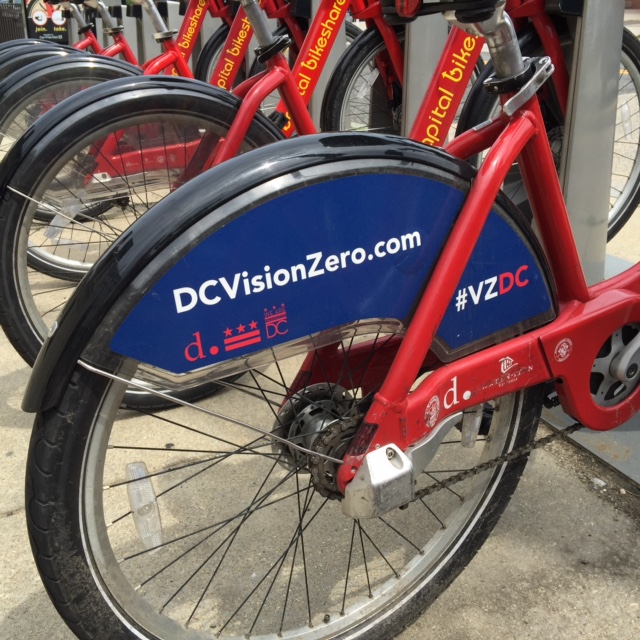
A new Report on Trauma Care is out that calls for a Vision Zero for Preventable Deaths.
See Infographic at http://www.nationalacademies.org/hmd/Reports/2016/A-National-Trauma-Care-System-Integrating-Military-and-Civilian-Trauma-Systems.aspx
There is a lot to like in this report. See the Recommendations at http://www.nationalacademies.org/hmd/~/media/Files/Report%20Files/2016/Trauma-Care/Trauma-Care-Recs.pdf
I like that the Report calls on the White House, the DOD, and the DHHS to get involved.
See some of my previous thoughts on this that NHTSA ignored at the cost of countless preventable tragedies at: https://www.careforcrashvictims.com/assets/VisionZero2014Article.pdf
and at: https://www.careforcrashvictims.com/blog/blog-goldenafgh/
and at: https://www.careforcrashvictims.com/assets/com-NHTSA-strategic-plan.pdf
A Google Drive link to the full Report is attached.
Lou
![]()
Dear Care for Crash Victims Community Members:
An excellent article in the NY Times reports:
The interior of a Jeep Grand Cherokee. Problems with the car involve an electronic gearshift, whose operation is similar to that of a video-game joystick. Credit Joe Raedle/Getty Images
“The death of the actor Anton Yelchin, killed when his Jeep Grand Cherokee rolled backward down a driveway and crushed him against a mailbox pillar last weekend, has cast a public spotlight on a problem with some models of Jeeps and other Fiat Chrysler vehicles.
But for the company, there is nothing new about the issue — which federal regulators first flagged last August.
The question is why, nearly a year later, Fiat Chrysler has still not come up with a fix for the problem, which has now been linked to hundreds of accidents, dozens of injuries and now — potentially — a well-publicized death.
The company, which issued a recall notice on more than one million affected vehicles in April, will say only it is still working on a solution, there was no decision about a recall until this year and there has been no delay. It has written to federal regulators that the remedy will include a software change and “an additional mechanism to mitigate the effect of operator error.”
That solution is expected no later than July or August, a Fiat Chrysler spokesman, Eric Mayne, said on Tuesday in an email.
And yet, as far back as March, Fiat Chrysler was telling federal investigators that it already had “potential solutions.”
The problem involves an electronic gearshift, whose operation is similar to that of a video-game joystick. It has confused many drivers, who thought they had left their cars in park, only to find they were in neutral, and started rolling away after the drivers stepped out.
Rollaway accidents are particularly dangerous, and the investigation and recall are taking too long, Clarence Ditlow, executive director of the Center for Auto Safety, a consumer advocacy group, said on Tuesday.
“There was no sense of urgency on Chrysler’s part or N.H.T.S.A.’s part given the potential for death or injury,” he said in an interview, referring to the National Highway Traffic Safety Administration.” See http://www.nytimes.com/2016/06/22/business/anton-yelchins-death-highlights-a-known-issue-with-jeeps.html
![]()
Lou
![]()
Dear Care for Crash Victims Community Members:
A citizen who cares alerts us:
Just when you think it can’t get any worse, it has…
We have learned about 2 more deaths that took place over the weekend and now the number of child vehicular deaths has risen to 23. Just two shy of the total number of fatalities that took place last year (25) at this time.
That’s right; four children have died in hot cars since Friday. Two on Friday, (Williamsport, PA & Navarre, FL) one on Saturday (Rocky Comfort, MO) and yet another one on Sunday. (Dallas, TX)
We simply cannot accept these deaths as tragedies and move on. KidsAndCars.org is the only organization that has been in the forefront, working to ensure technology is added to vehicles that can prevent these heartbreaking deaths.
PLEASE add the Look Before You Lock safety messages to your website, articles, TV segments, billboards and anywhere you can reach people who care for our children. Yes, it takes a village…
What is the answer? PLEASE work with us to make sure that technology is finally added to vehicles to prevent these horrific deaths. The auto industry already recognizes that we’re human and our memories often fail us. Today our cars are able to warn us if we leave our headlights on, our keys are in the ignition, our car door is open, if we are low on gas and if our seat belt isn’t buckled. But if a child is left behind, it can be fatal. So we believe it’s reasonable to believe that technology can provide an alert if a child is left alone in a vehicle.
Safety is something every family deserves. It shouldn’t be an option. And it shouldn’t be political. The federal government and automakers, along with safety advocates, have the ability to solve this problem. Why can’t we have technology tell us if a child remains in the car? We can do this. We must do this. It’s about working together to save lives by exploring all available options that would prevent a child from being left behind in a vehicle.
Other life-saving child safety initiatives KidsAndCars.org spearheaded include adoption of federal safety standards requiring all vehicles be equipped with trunk release latches to prevent trunk entrapment, safer power window switches to prevent children from being strangled, and brake transmission shift interlock systems so children cannot inadvertently knock a vehicle into gear. Most recently a federal DOT rule was issued requiring rear visibility systems as standard equipment on all new passenger vehicles by May 2018.
We know technology works. Today, technology saves your car battery. Tomorrow, it could save your child.
—
Check out some of our accomplishments in 2015: http://conta.cc/24deY6W
Donate Now: http://kidsandcars.org/donate.html
Lou Lombardo
![]()