Safety Leader Cally Houck Sends Strong Letter to DNC


Safety Leader Cally Houck Sends Strong Letter to DNC

March, 2016

Dear Care for Crash Victims Community Members:

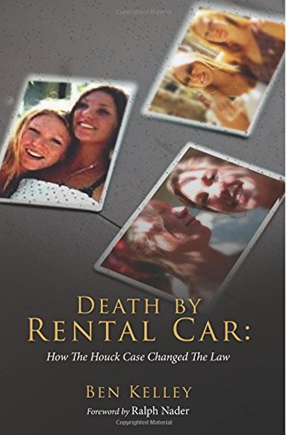
Cally Houck, mother who became a Safety Leader after losing two daughters in a tragic unfixed defective rental car, has allowed publication of her views.   She has written a strong letter to the DNC.“I am solid Bernie.    Here’s why:

 My Letter to the DNC
 It’s time to start thinking about the candidate the people overwhelmingly want. You will not be able to shove your candidate down our throats. You are an institution that will shoot itself in the foot in order to coronate a candidate mistrusted by everyone but the myopic and entrenched elites and others who won’t see through the fog and address the front runner’s abysmal record. I for one, will abandon my political affiliation for the first time in my 42 years of voting. I’m tired of a party that ignores the voices of so many. I’m done with cronyism politics that serve only to acquire power and money, in sordid backroom deals. I will not be silent as our country continues to devolve into a consolidation of power, wealth and indifference to the needs of the people, of which they are sworn to represent. . I am one of hundreds of thousands who feel what I feel;  the current political system is rigged, corrupt and our representatives, for the most part,  turn a deaf ear to the voices of the American People, who have started to rise up to end the status quo which has done nothing to fix the problems of our country. The current favored candidate of the DNC is a woman who brokered arms and weapons, including chemical and biological weapons, to countries that have repressive regimes, in exchange for donations to the Clinton Foundation.  I will not tolerate a candidate under a justified federal investigation.  I will not accept voter suppression and election fraud..  You either listen to us or go down in the flames of obscurity. One more thing. If the DNC and Bernie’s opponent engaged in honest politics and run a clean campaign, instead of rigging the system, campaigning violations, dishonesty, she may have had a chance to save party, and honestly win the nomination, inspite of my support for Bernie, Months ago, I would have voted for her if she was named the nominee. But when I saw the level of deceit, flagrant polling violations and abuses at polling and caucus sites, disenfranchising voters by her and her husband and their campaign puppets, purchasing super delegates, and taking millions in corporate donations, she lost my potential vote. Now all I see is a woman with no integrity, no vision, no honor and no conscience. She just wants to win at the expense of the American people’s right to choose. I will change my party affiliation at the end of the convention, unless Bernie is the nominee, as will thousands and thousands, and thousands of Dems who believe in justice, authentic democracy, morality and fairness. It’s time to reinvent the political party system.
Cally Houck” 
Lou


“It’s the corruption, stupid”

March, 2016

Dear Care for Crash Victims Community Members:

Why does the Obama Administration fail to protect Americans from crash injuries and adopt a Vision Zero Goal for the nation?

It is becoming clearer to more Americans that it is the corruption.  Read article “It’s the corruption, stupid…”

“If you doubt it, consider Barack Obama. In 2008, America was almost as angry at its government as it is today. Then as now, the media and political consultants to both parties were blind to the issue. But Obama and strategist David Axelrod sort of got it. Axelrod wasn’t much for specificity. He preached the “politics of biography” (sell the person, not the policy). So Obama spoke of transforming “Washington’s culture.” It was powerful stuff, but not quite powerful enough.

Voters knew the problem wasn’t “partisan gridlock” but a hammerlock of special interests. They could abide politicians’ incivility but not their corruption. Obama added some policy meat to the metaphorical bone of his message. He called whistle-blowers heroes and vowed to strengthen freedom of information, to let C-SPAN cameras film healthcare negotiations, end no-bid contracts, close revolving doors and never hire lobbyists to handle matters of special concern to their ex-clients. By late fall, nearly every speech he gave ended in a rousing call for reform.

Breaking those vows was the original sin of the Obama administration. No C-SPAN cameras ever filmed a meeting. He didn’t treat whistle-blowers as heroes; he broke records prosecuting them. He didn’t end no-bid contracts; he increased them. He didn’t ban lobbyists; he recruited them. (Healthcare industry consultants drove that team; he even hired a defense lobbyist to oversee Pentagon procurement policy.) Revolving doors kept swinging; every ex-Obama staffer you ever heard of now sits on some comfy corporate perch.  Republicans didn’t kill the reforms. Obama had the power to implement each one by executive order, but chose not to.

In 2008, Obama raised more money from big business than any candidate in either party’s history and in 2009 he hired the most conservative economic team of any Democratic president since Grover Cleveland. He then sided with insurers against a public option, with banks against rescuing homeowners and with business against raising the minimum wage. If you’re highly educated and care more about cultural than economic issues, you may not have noticed. If you’re financially pressed, you may be torn between Sanders and Trump, or have given up on politics altogether.”  See


Fatal Seat Back Failures, Pressure Grows For Stronger and Safer Seats, Tragedies Will Continue

Dear Care for Crash Victims Community Members:

Crash victims demand safety

1. Media educates the public.  Watch videohttp://www.cbsnews.com/news/cbs-news-investigation-of-seat-back-failures-sparks-action-by-congress/

2.  Progressive legislators provides pressure.  See letters

http://www.markey.senate.gov/letters-to-automakers-on-seatback-safety

3.  Reporters investigate.

http://www.bloomberg.com/news/articles/2016-05-25/crash-test-dummies-get-in-back-seat-to-make-uber-riders-safer

4.  Auto Safety Advocates Build the Case >

http://www.autosafety.org/nhtsa-urged-to-warn-parents-of-seat-back-failure-dangers-to-children-in-rear-seats/

It is now up to citizens to voice their views as voters and consumers.

The tragedies will continue until the pressure builds to ends these senseless deaths and injuries.

Lou

Lives Matter vs. Money Matters


Lives Matter vs. Money Matters

March, 2016

Dear Care for Crash Victims Community Members”

More evidence of the rigged system where money matters more than lives.

Lives Matter Citizens petitioned NHTSA in January, 2016 to save nearly 100 lives per year based on NHTSA research on automatic emergency braking technologies.  See

Money Matters
NHTSA, IIHS, and Automakers have agreed to install automatic braking technologies on a voluntary basis by the year 2022.   Seehttp://www.nhtsa.gov/About+NHTSA/Press+Releases/nhtsa-iihs-commitment-on-aeb-03172016
What’s Wrong?
See Joan Claybrook’s straight talk below:

Statement of Joan Claybrook, Former NHTSA Administrator, on Automatic Emergency Brakes

With today’s announcement on Automatic Emergency Brakes (AEB), the National Highway Traffic Safety Administration (NHTSA) has failed the public by cutting a secret deal with auto makers for a voluntary unenforceable standard.  In recent years, the agency also failed the public with secret meetings with auto companies about deadly defects it took years to recall.  Enough is enough. Let the public in.

In 1966 Congress created NHTSA, authorizing issuance of mandatory vehicle safety standards, saying this was necessary because voluntary industry standards don’t work.

Fifty years later, in 2016, NHTSA has abrogated its responsibility to the public by excluding suppliers and the public and secretly supporting auto company voluntary installation of AEB.  The agency/industry deal allows six to nine years for installation even though about half of the most popular 2016 models already offer AEB.  This deal could slow down rather than speed up additional installation.  NHTSA itself says its mandatory vehicle standards have saved over 600,000 lives.

Further, the performance requirements agreed to by NHTSA and auto companies are still secret and thus the public cannot comment on or evaluate them.   A voluntary standard is not enforceable and it is insane to trust auto companies given the string of cover-ups and defect failures in recent years.   Auto companies can impose excessive prices on optional AEB systems, linking their availability to other expensive add-ons like heated steering wheels, thus excluding lower-bracket buyers.

Reverting to voluntary standards undermines NHTSA’s credibility, thwarts innovation that mandatory regulation encourages, discourages new NHTSA research and receipt of Congressional funding, and allows the auto companies to secretly set the terms of the standard to accommodate their production and financial investments in new vehicles. 

NHTSA should do its job and propose a mandatory AEB safety standard in response to the petition filed in January 2016 by consumer groups. 


###

So when Government and Industry get together money and power will prevail and people will die and suffer injuries.  
It is an election year America.  Ask yourselves: Will we be better off in 2022 with this Obama Administration action or with safety policies advocated by citizen groups?
Based on my 50 years work in Washington, I believe the answer is better with the citizen groups.  We need automatic emergency brakes on government corruption.
Lou


Toyota Automatic Emergency Braking To Be Standard – Senators Urge NHTSA to Do More


Toyota Automatic Emergency Braking To Be Standard – Senators Urge NHTSA to Do More

March, 2016

Dear Care for Crash Victims Community Members:

Senators Blumenthal and Markey recognize Toyota commitment & urge NHTSA to do more.  See

For Immediate Release:March 22, 2016
Contact: Josh Zembik (Blumenthal) – 202-224-6452Giselle Barry (Markey) – 202-224-2742

BLUMENTHAL, MARKEY APPLAUD TOYOTA COMMITMENT TO INSTALLING AUTOMATIC BRAKING ON MOST VEHICLES BY 2017  

(Hartford, CT) – U.S. Senators Richard Blumenthal (D-Conn.) and Edward J. Markey (D-Mass.) today released the following statement after Toyota announced that almost all Toyota and Lexus vehicles will come standard with automatic emergency braking by 2017. The news follows an announcement last week by the National Highway Traffic Safety Administration’s (NHTSA) and Insurance Institute for Highway Safety that 20 automakers have committed to make automatic emergency braking standard on all new cars by 2022. 


“We are pleased that by the end of 2017, nearly all new Toyota and Lexus vehicles will come standard with emergency braking technology. In light of NHTSA’s slow and unsteady safety approach, it seems, unfortunately, that automakers and consumer demand will drive safety advances – not the regulators charged with doing so. We urge NHTSA once again to make automatic emergency braking and forward collision warning technologies standard and mandatory in all new vehicles, and we will seek measures to ensure these lifesaving technologies are available to all drivers ahead of the 2022 deadline.”


Blumenthal and Markey are members of the Senate Committee on Commerce, Science, and Transportation.


Detailed Toyota Release follows:

Home > News Releases > Lexus and Toyota will make automated braking standard on nearly every model and trim level by end of 2017

Lexus and Toyota will make automated braking standard on nearly every model and trim level by end of 2017

March 21, 2016

Lexus Safety System+ and Toyota Safety Sense packages to be standard equipment four years before NHTSA industry AEB target

Advanced automatic safety technology that was once available on only the most expensive new vehicles is about to be included as standard equipment on almost every Lexus and Toyota model and trim level in the United States. Announced today at the New York Auto Show, Toyota will begin to include the Lexus Safety System+™ and Toyota Safety Sense™ packages, anchored by automatic emergency braking (AEB), on almost every new vehicle by the end of 2017.

The announcement marks a major commitment by Toyota to help save lives and reduce highway injuries. Making Lexus Safety System+™ and Toyota Safety Sense™ standard equipment on almost every model by the end of 2017 will make AEB technology widely available four years ahead of the 2022 industry target announced last week by the National Highway Traffic Safety Administration (NHTSA) and Insurance Institute for Highway Safety (IIHS).

“At Toyota, we are committed to creating better ways to move for everyone,” said Jim Lentz, CEO of Toyota Motor North America. “High-level driver assist technologies can do more than help protect people in the event of a crash; they can help prevent some crashes from ever happening in the first place. We are proud to help lead this industry in standardizing these systems and bring automated braking to our customers sooner rather than later.”

Already available as a low-cost option on a broad range of Lexus and Toyota vehicles, Lexus Safety System+™ and Toyota Safety Sense™ are designed to help address three key areas of driver assistance: preventing or mitigating frontal collisions – including pedestrians; helping keep drivers within their lane; and enhancing road safety during nighttime driving. Technologies include Toyota’s Pre-Collision System, Lane Departure Alert, and Automatic High Beams.

Twenty-five out of thirty Lexus and Toyota models will include Lexus Safety System+™ or Toyota Safety Sense™ as standard equipment. Model-specific target dates for offering these advanced, active safety packages as standard equipment will be announced at a later date. Models that will not offer the systems standard by the end of 2017 include Lexus GX, Toyota Mirai, 4Runner, and 86 (jointly developed with Subaru), and Scion iA (developed by Mazda). Mirai and Scion iA currently provide pre-collision including AEB as standard equipment.

ABOUT TOYOTA SAFETY SENSE

The Toyota Safety Sense™ C (TSS-C) package features three proprietary active safety technologies and combines a camera and laser beam for enhanced performance and reliability. The package can help prevent or mitigate collisions in a wide range of vehicle speeds.

Pre-collision System (PCS) – Vehicle Detection

PCS uses a camera and laser beam to detect the vehicle ahead. When the system determines there is a possibility of collision, it prompts the driver to take evasive action and brake by using an audio and visual alert. These alerts operate when the vehicle’s speed is between approximately 7 to 87 miles-per-hour. If the driver notices the hazard and brakes, the system may provide additional braking force using Brake Assist *3. If the driver does not brake in a set time, and the system determines that the possibility of a frontal collision with another vehicle is extremely high, the system may automatically apply the brakes, reducing speed by approximately 19 mph *1 in order to help the driver reduce the impact and in certain cases avoid the collision. The operational range of PCS covers speeds at which at least 80 percent of rear-end collisions occur (i.e. relative speeds of between approximately 7 – 50 mph).

Lane Departure Alert (LDA)

LDA uses a camera to detect visible white and yellow lane markings in front of the vehicle and the vehicle’s position on the road. If the system determines that the vehicle is starting to unintentionally deviate from its lane, the system alerts the driver with an audio and visual alert. When the alerts occur, the driver must check the surrounding road situation and carefully operate the steering wheel to move the vehicle back to the center part of their lane.

Automatic High Beam (AHB)

AHB4 is a safety system designed to help drivers see more of what’s ahead at nighttime without dazzling other drivers. When enabled, Automatic High Beams uses an in-vehicle camera to help detect the headlights of oncoming vehicles and tail lights of preceding vehicles, then automatically switches between high and low beams as appropriate to provide the most light possible and enhance forward visibility.

Toyota Safety Sense™ P combines a camera and millimeter-wave radar for enhanced performance and reliability. In addition to the three active safety technologies included in the Toyota Safety Sense™ C package, the Pre-collision System offered with this package also includes a pedestrian detection function. Toyota Safety Sense P also offers Radar Cruise Control functionality. (see below) TSS-P enhances the Pre-Collision System by enhancing speed ranges/speed reduction capability for potential collisions with a preceding vehicle and adding a Pedestrian Detection function, enhances LDA by adding a Steering Assist function on certain models, and adds Dynamic Radar Cruise Control.

Pre-Collision System with Pedestrian Pre-collision function – Vehicle and Pedestrian Detection

Vehicle Detection

PCS uses millimeter-wave radar and a camera to help detect the vehicle ahead of the vehicle. When the system determines there is a possibility of collision it prompts the driver to take evasive action and brake, by using an audio and visual alert. These alerts operate when the vehicle’s speed is between approximately 7 miles-per-hour and the vehicle’s top speed. If the driver notices the hazard and brakes, the system may provide additional braking force using Brake Assist*3. If the driver does not brake in a set time and the system determines that the possibility of a frontal collision with another vehicle is extremely high, the system may automatically apply the brakes, reducing speed in order to help the driver reduce the impact and in certain cases avoid the collision. For potential collisions with vehicles, the enhanced PCS system included with the TSS- P package operates at relative speeds of between 7 miles-per-hour and the vehicle’s top speed, reducing speed by approximately 25 mph*2.

Pedestrian Detection

In certain conditions, the PCS system with the TSS-P package may also help to detect pedestrians. The in-vehicle camera of PCS detects a potential pedestrian based on size, profile, and motion of the detected pedestrian. If PCS determines that the possibility of a frontal collision with a pedestrian is high under certain conditions, it prompts the driver to take evasive action and brake by using an audio and visual alert, followed by Brake Assist*3. These alerts operate when the vehicle’s speed is between approximately 7 and 50 miles-per-hour. If the driver does not brake in a set time and the system determines that the risk of collision with a pedestrian is extremely high, the system may automatically apply the brakes, reducing speed in order to help the driver reduce the impact and in certain cases avoid the collision. The PCS included with the TSS-P package may operate automated brake for potential collisions with a pedestrian when vehicle speeds are between 7-50 mph, and may reduce vehicle speed by up to 19 mph*1.

Dynamic Radar Cruise Control

On highways, TSS-P equipped vehicles include Dynamic Radar Cruise Control 5 functions similar to conventional “constant speed” cruise control in that its helps vehicles travel at a consistent speed set by the driver, but this system adds a vehicle-to-vehicle distance control mode which assists the driver by adjusting vehicle speed (within a set range) to help maintain a pre-set distance to a preceding vehicle when the preceding vehicle is traveling at a lower speed. By using a forward-facing camera and millimeter-wave radar to monitor a preceding vehicle merging into or out of the lane, Dynamic Radar Cruise Control helps maintain smooth acceleration and deceleration while driving.

Lane Departure Alert (LDA) with Steering Assist function

In addition to the alert function of LDA found in TSS-C vehicles, TSS-P equipped vehicles with Electronic Power Steering assist (EPS) will feature a Steering Assist function. When equipped and enabled, if the system determines that the vehicle is on a path to unintentionally depart from its visibly marked lane, the system will provide small corrective steering inputs to the steering wheel for a short period of time to help the driver keep the vehicle in its lane.

LEXUS SAFETY SYSTEM+™

Lexus Safety System+™ integrates several of Lexus’s existing active safety technologies: under certain conditions, the Pre-Collision System (PCS) helps prevent and mitigate collisions; Lane Departure Alert (LDA) helps prevent vehicles from departing from their lanes; and Automatic High Beam (AHB) helps ensure enhanced forward visibility during nighttime driving. As part of a multi-faceted approach to active safety, the Lexus Safety System+™ package combines millimeter-wave radar with a camera, achieving high reliability and performance.

Pre-collision System – Pedestrian and Object

This system uses millimeter-wave radar and a camera to detect pedestrians in addition to vehicles under certain conditions. To help prevent or mitigate collisions, the system activates an audio and visual alert in addition to brake assist, followed by automated braking if the driver does not brake in time. Automated braking operates at relative speeds of between 7 – 50 mph for potential collisions with pedestrians, and can reduce speed by approximately 19 mph*1. For potential collisions with vehicles, the PCS system operates at relative speeds of between 7 mph and the vehicle’s top speed, reducing speed by approximately 25 mph*2.

Lane Departure Alert (LDA)

LDA uses a camera to detect visible white and yellow lane markings. If the vehicle starts to deviate from a lane, LDA alerts the driver with an audio-visual alert and steering wheel vibration. Some models are also equipped with Lane Keep Assist, which provides steering input to help make it easier for the driver to remain within lane markings.

Automatic High Beam (AHB)

AHB4 is a safety system designed to help drivers see more of what’s ahead at nighttime without dazzling other drivers. When enabled, Automatic High Beams uses an in-vehicle camera to help detect the headlights of oncoming vehicles and tail lights of preceding vehicles, then automatically switches between high and low beams as appropriate to provide the most light possible and enhance forward visibility. AHB is designed to function at speeds of approximately 25 mph or higher.

Dynamic Radar Cruise Control (DRCC)

On highways, Lexus Safety System+™ equipped vehicles include Dynamic Radar Cruise Control5 functions similar to conventional “constant speed” cruise control in that its helps vehicles travel at a consistent speed set by the driver, but this system adds a vehicle-to-vehicle distance control mode which assists the driver by adjusting vehicle speed (within a set range) to help maintain a pre-set distance to a preceding vehicle when the preceding vehicle is traveling at a lower speed. By using a forward-facing camera and millimeter-wave radar to monitor a preceding vehicle moving into or out of the lane, DRCC helps maintain smooth acceleration and deceleration while driving.

*1 Results achieved during testing using a vehicle travelling at 19 mph and a stationary vehicle / pedestrian; system operation depends on driving environment (including road and weather) and vehicle circumstances.

*2 Results achieved during testing using a vehicle travelling at 25 mph and a stationary vehicle; system operation depends on driving environment (including road and weather) and vehicle circumstances.

*3 Brake Assist is designed to help the driver take full advantage of the benefits of ABS. It is not a substitute for safe driving practices. Braking effectiveness also depends on proper brake-system maintenance, tire and road conditions.

*4 AHB is designed to work at speeds of approximately 25 mph or higher

*5 DRCC is designed to work at speeds of approximately 25 mph to 110 mph

Drivers should always be responsible for their own safe driving. Please always pay attention to your surroundings and drive safely. Depending on the conditions of roads, vehicles, and weather, etc., the system(s) may not work as intended.

http://www.automotiveworld.com/news-releases/lexus-toyota-will-make-automated-braking-standard-nearly-every-model-trim-level-end-2017/


Defective Vehicle Seats Allowed By NHTSA To Kill and Maim for Decades

March, 2016

Dear Care for Crash Victims Community Members:

Fair Warning editor Myron Levin has published an excellent article that cites several crash victim tragedies.  The article notes:

“For decades, safety regulators and the auto industry have known that many seats can fail in moderate- to high-speed rear-end crashes. When the seat collapses, the driver or front seat passenger can slide rearward out of the seat belt and be launched headfirst into the backseat, badly injuring a backseat passenger or being paralyzed or killed himself.

Since the 1990s, automakers and the National Highway Traffic Safety Administration have instructed parents to put young children in the backseat to avoid injury from an inflating airbag. But critics say they have failed to provide another crucial piece of information: Due to the risk of seat failure in a rear collision, the safest place for a child is behind an unoccupied seat, or else behind the lightest person in the front.

NHTSA officials “are the safety experts,” said Clarence Ditlow, executive director of the Center for Auto Safety, a nonprofit watchdog group. “They know the seatbacks have been collapsing for years. They know that if you put a kid behind an occupied seat, you’ve got a problem. And they’ve never shared that expertise with the public.’’

On March 9 the center filed a petition urging NHTSA to modify its child seating recommendations, and to require automakers to state in owner’s manuals that, whenever possible, children should sit behind an empty front seat or behind the lightest person. Such warnings are essential, the petition said, because of NHTSA’s decades-long failure to require sturdier seats that perform better in rear crashes. In a letter to NHTSA Administrator Mark R. Rosekind, the group also urged the agency to act favorably on a separate petition, filed last September, to upgrade its seatback standard. It’s uncertain when NHTSA will act on the petitions.

Adopted in 1967, the federal seat standard is nearly a half-century old. To support their view that the standard is a joke, safety engineers have run tests showing that lawn and banquet chairs, and even cardboard seats, are sturdy enough to meet the strength requirements. NHTSA officials themselves have repeatedly acknowledged that the standard is outdated, but say their hands are tied.”  See http://www.fairwarning.org/2016/03/flawed-seats/#sthash.kQ9Sx4gm.dpuf

and https://www.careforcrashvictims.com/blog/blog-seatbackfailuresresponsibility/

For who has tied NHTSA’s hands and how see  https://www.careforcrashvictims.com/blog-lastdecade.php

And http://www.nytimes.com/2014/10/29/opinion/weak-oversight-deadly-cars.html

Freeing NHTSA to do its job requires changes – for the better – all the way up to the White House.  And the Congress.  And the Courts.

Lou


Senators Blumenthal and Markey Urge NHTSA Action Now


Senators Blumenthal and Markey Urge NHTSA Action Now

March, 2016

Dear Care for Crash Victims Community Members:

cid:image002.png@01D08CC6.9E16EC20


For Immediate Release:March 17, 2016
Contact: Josh Zembik (Blumenthal) – 202-224-6452 Giselle Barry (Markey) – 202-224-2742


BLUMENTHAL, MARKEY TO NHTSA: CONSUMERS CAN’T WAIT UNTIL 2022 FOR LIFESAVING BRAKING TECHNOLOGY

(Washington, D.C.) – U.S. Senators Richard Blumenthal (D-Conn.) and Edward Markey (D-Mass.) issued the following statement in response to an announcement today by the National Highway Traffic Safety Administration’s (NHTSA) and Insurance Institute for Highway Safety that 20 automakers have committed to make automatic emergency braking standard on all new cars by 2022.  

“NHTSA is apparently content braking at the very last second for safety by allowing manufacturers to wait until 2022 to install lifesaving technology that has already been proven to save lives. This safety technology, which could prevent or reduce the consequences of an estimated 80 percent of rear-end collisions, can and needs to be in the car of today, not the car of tomorrow. Today’s announcement by DOT and IIHS adds little to improve safety beyond the status quo, and simply demonstrates the continued culture of informality between automakers and regulators that has led to thousands of deaths. Furthermore, as a voluntary agreement, it holds no force. We urge NHTSA to make automatic emergency braking and forward collision warning technologies standard and mandatory in all new vehicles and will seek measures to ensure these lifesaving technologies are available to all drivers sooner.”